
THE BARTONIAN
www.bartonians.uni4m.co.uk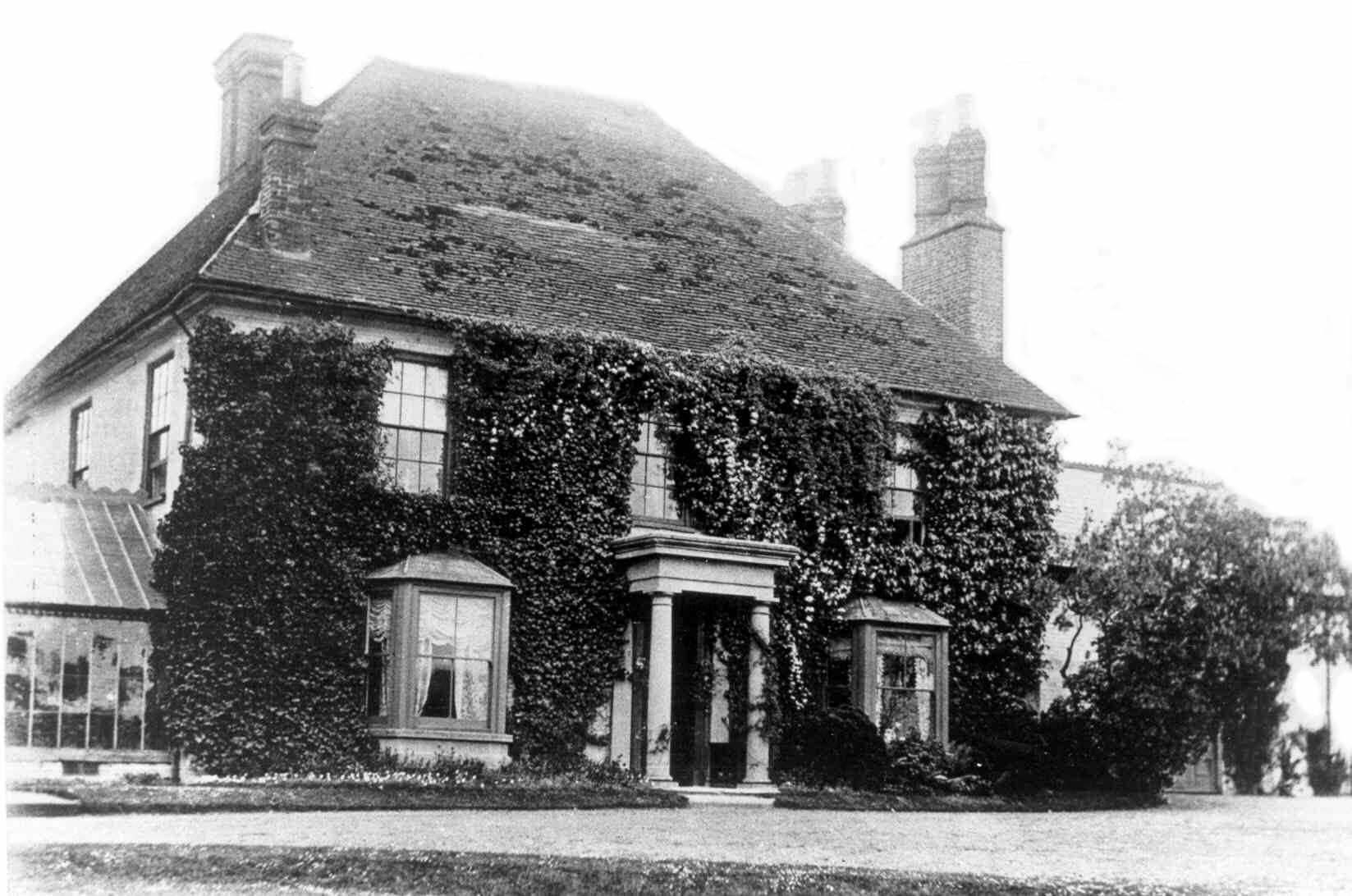
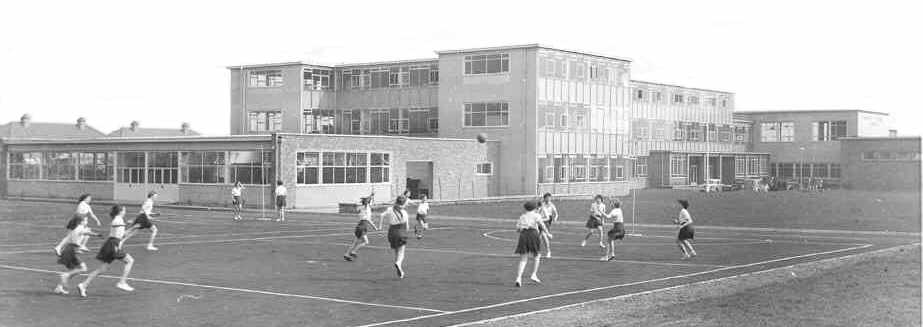
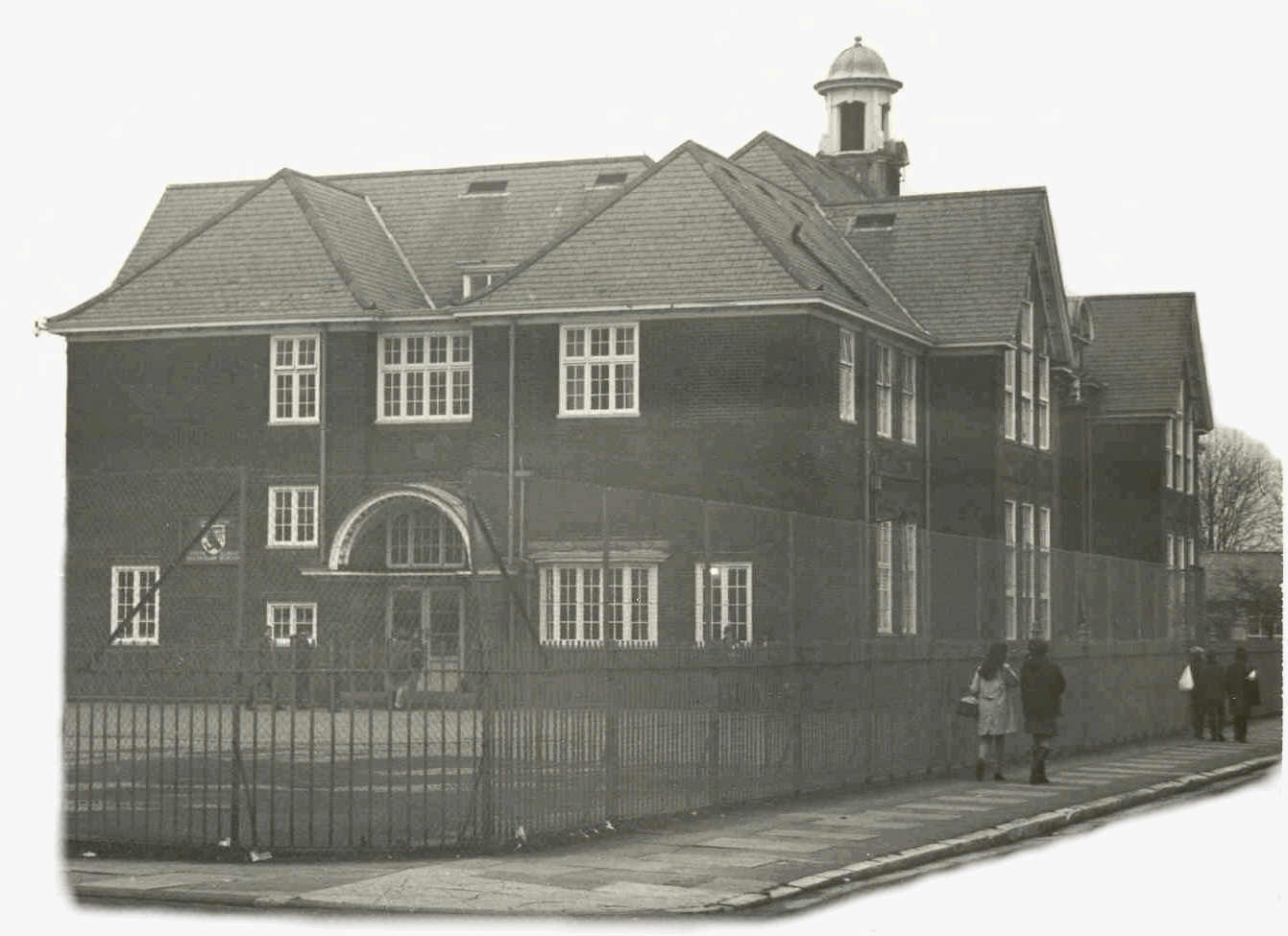
Barton Peveril 1918 Barton Peveril Grammar School 1957 (College from 1973) Eastleigh County High School 1932
-------------------------------------------------------------------------------------------------------------------------
Issue No. 57 Winter 2016
**************************************************************************************************
The Magazine for ex-pupils of Eastleigh County High School & Barton Peveril
**************************************************************************************************
Editorial Comment:
A lot has happened on the political front since our spring edition. Britain has voted for Brexit and America has voted for Donald Trump as their next president; neither result was predicted or desired by the media or their respective governments, which just goes to show what can happen in democracies when the general population feels ignored by those governing them. Exciting times.
We did not have enough contributions from members to publish a summer edition, so if you want a spring edition please get writing - or send us one of your snapshots with a caption perhaps:-
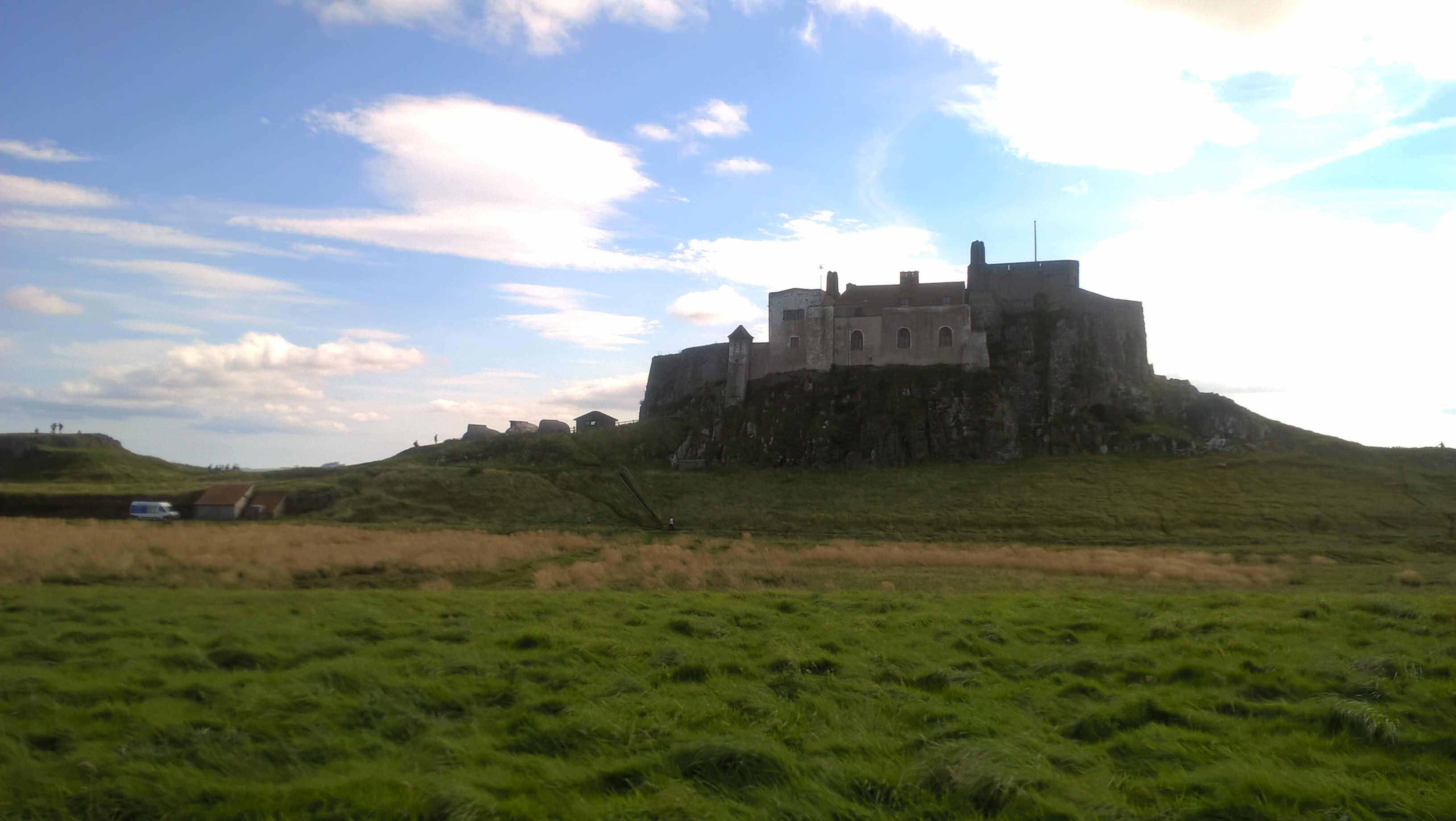
Lindisfarne Castle in late August, viewed from near the walled garden.
Barton Peveril College Today
No surprise, perhaps, that based on a vote in College, Barton Peveril students would have liked to remain in Europe. Why? Freedom of movement in Europe has changed our communities over many years and 16 year olds born of Polish parents studying at Barton Peveril are, not surprisingly, very much like 16 year olds whose parents were born in the UK. Also, many of our students relish the idea of travel, of working abroad for a period of their lives, and learning to respect and appreciate other countries, their customs and their cultures. Their aspirations have taken a heavy knock.
These points aside, it is the challenge of educating young people with values, with a sense of responsibility for the wider community, with skills of intellectual enquiry and questioning that may be made more difficult by the nature of the referendum debate and the BREXIT win. Too often in the campaign, measured arguments on both sides were hijacked by knee jerk interpretations of immigration and self-determination. In communities hit by a banking crisis, resulting recession, and cuts in public spending, it has been too easy to conflate the state of people’s lives with Britain’s position in Europe. In a culture where some of our politicians have not served us well, it has been too easy to look for a quick and simple way to protest at politics, politicians, and the status quo, without really questioning what qualities both politicians and Europe may bring.
Time will tell how much more difficult it will now be to encourage students to reflect and to recognise important values which hold communities together. In the meantime, we will ask Barton Peveril students to explore and research arguments, to consider opinions and to challenge these opinions. We will continue to ask our students to seek head solutions to certain problems, not heart ones. We will encourage students to reflect on what they contribute to their community and recognise their responsibility to social cohesion and opportunity. Above all, we will continue to ask our students to show tolerance, promote equality, diversity and inclusion. We will do our part in helping at a micro level to produce worthy citizens of our world community. Let’s hope our politicians will step up to the more daunting macro challenge of making our nation an exemplary member of a more stable and fairer world community. Let’s hope Barton Peveril students become politicians!
Jonathan Prest, Principal, BP College 30 June 2016
_______________________________________________
Jonathan was unable to attend the AGM but he sent us the following letter:
Firstly, let me apologise for not being with you at your AGM today. I’m afraid it clashes with an important family event which I really must attend. I was delighted, however, to get to last night’s dinner and talk to some of the Old Bartonians then. Good luck with the AGM today.
Last year the Old Bartonians very generously gave the College £1000 which we used to support three students:
Lydia Chester doing work in South Africa with Christian charity working to alleviate poverty.
Jessica Christian doing volunteer English as a second language teaching in China.
Matthew Wateridge doing a short work placement in a hospital in Tanzania and climbing Kilimanjaro for the Help the Heroes charity.
Oliver Windsor who will be doing work placement in Singapore this year.
Lydia has sent us the following report…
#My Gap Year with Soul61
Lydia Chester
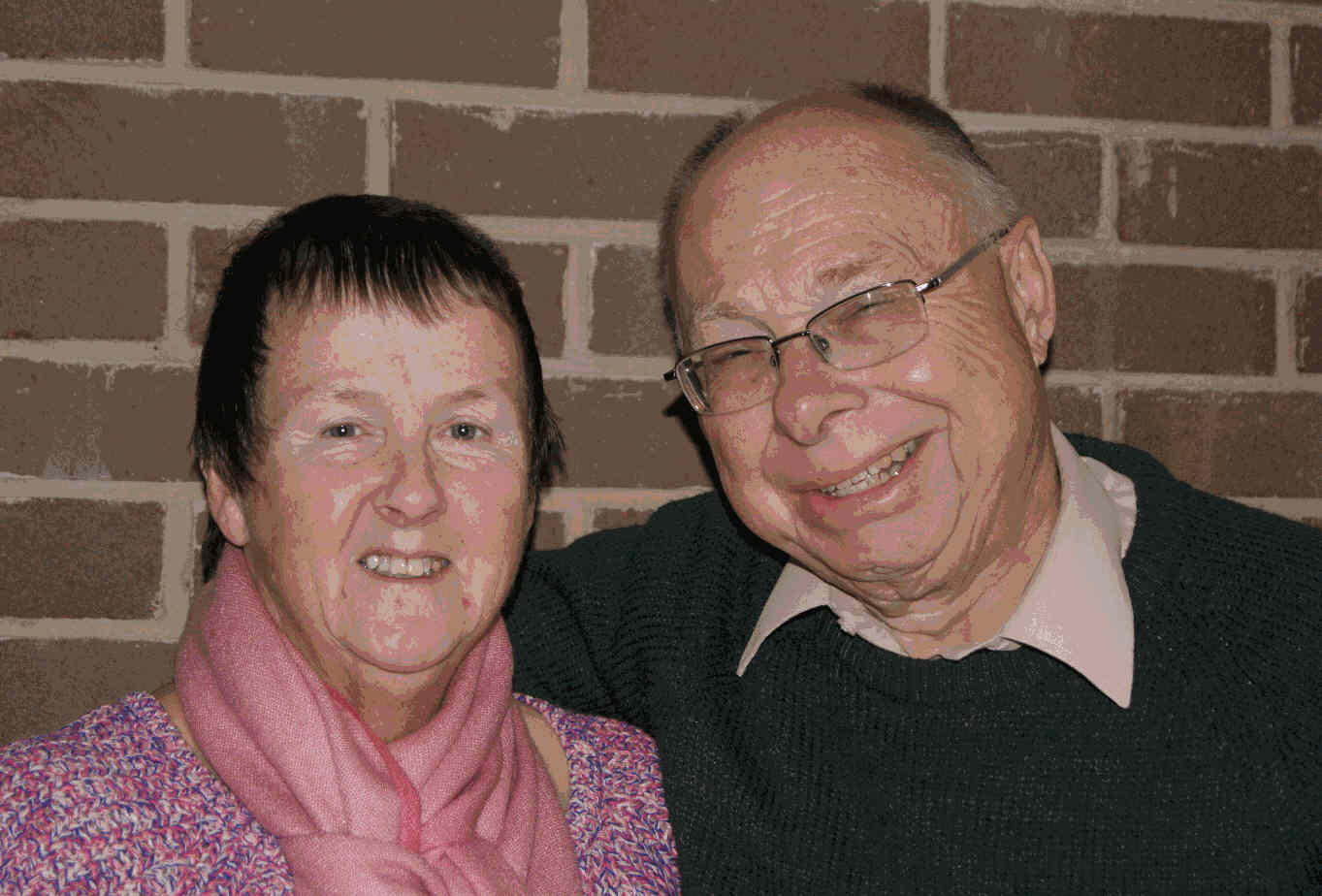
On the 31st of October 2015 I moved to Watford to begin my gap year course with Soul Survivor Church and, although before I left I knew what the course involved, I had no idea how much it would impact me in my life. I have had many opportunities and amazing experiences since being here and I am so thankful for all the support I received in getting here, including the bursary sponsored by the Old Bartonians.
There are 25 of us on the course (mixed girls and boys between 18 and 23) and we live in six separate houses with various coursemates. I’m in a lovely terraced house with three of the other girls. Very near the beginning of the course (after we were introduced to the church and had a few induction sessions e.g. how to deal with conflict, how to handle money) we each got put onto a certain placement where we would be working for the rest of the year. I was put onto the children’s work placement, meaning that I help to run toddler groups, mum groups and children’s church on Sundays. Fortunately this meant taking part in helping put together a Peter Pan Pantomime for the local community, a Narnia film night where a whole warehouse was transformed into Narnia and a Santa’s Grotto at Christmas for the local children.


I work with an incredible hard-working team of people who all encourage me in whatever I do. I have definitely made some life-long friends on this course.

We have done different kinds of outreach such as delivering Christmas cards to the majority of houses and flats in North Watford (as many as we could in the time we had!) and helped with the local café and car parking for events. Also a group of us got together to go to a family’s house that had been partially burnt down and we helped to redecorate it and build it up again.

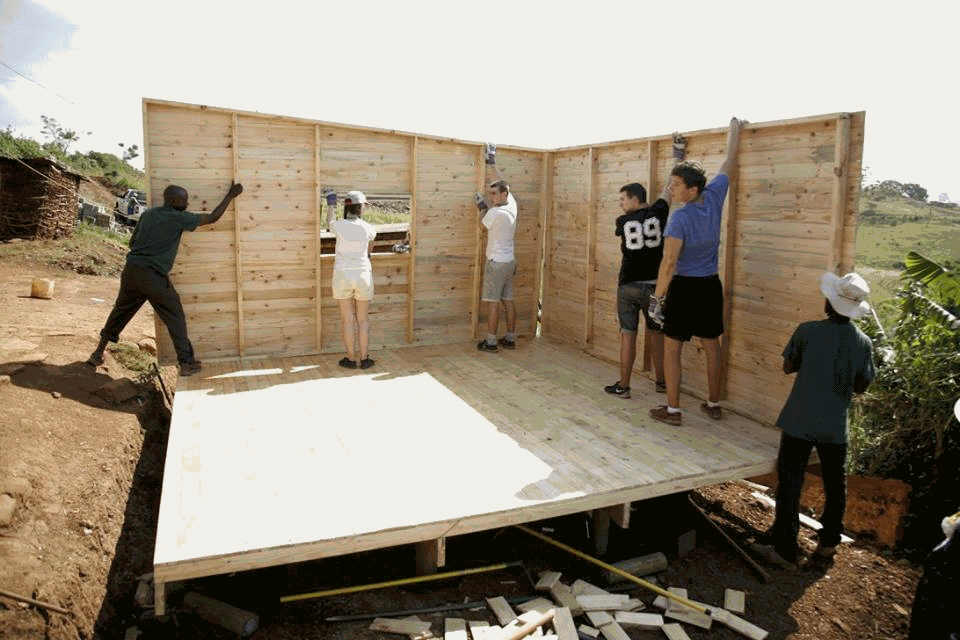
I had the most amazing opportunity this April to go to Durban in South Africa to serve at a village for AIDS orphans and to go out into the impoverished community and build a house for a family there. Some of the things we saw were horrific but it made us all even more passionate to change the world for better. LIV Village (the AIDS orphans village) was the most incredible place. A couple named Tich and Joan Smith started the whole thing when God gave Tich a vision of a village in South Africa where children that have been abused, orphaned or come from unstable homes are happily laughing, playing and learning in a safe place. We had the incredible privilege to see this in person and help out with the children’s holiday club there. On one of the days that we were there we had the opportunity to take part in redecorating the little houses in the village to make them into homes – the joy on the children’s faces was indescribable.
Thank you so much for sponsoring me as this gap year has really changed my life.
_____________________________________________
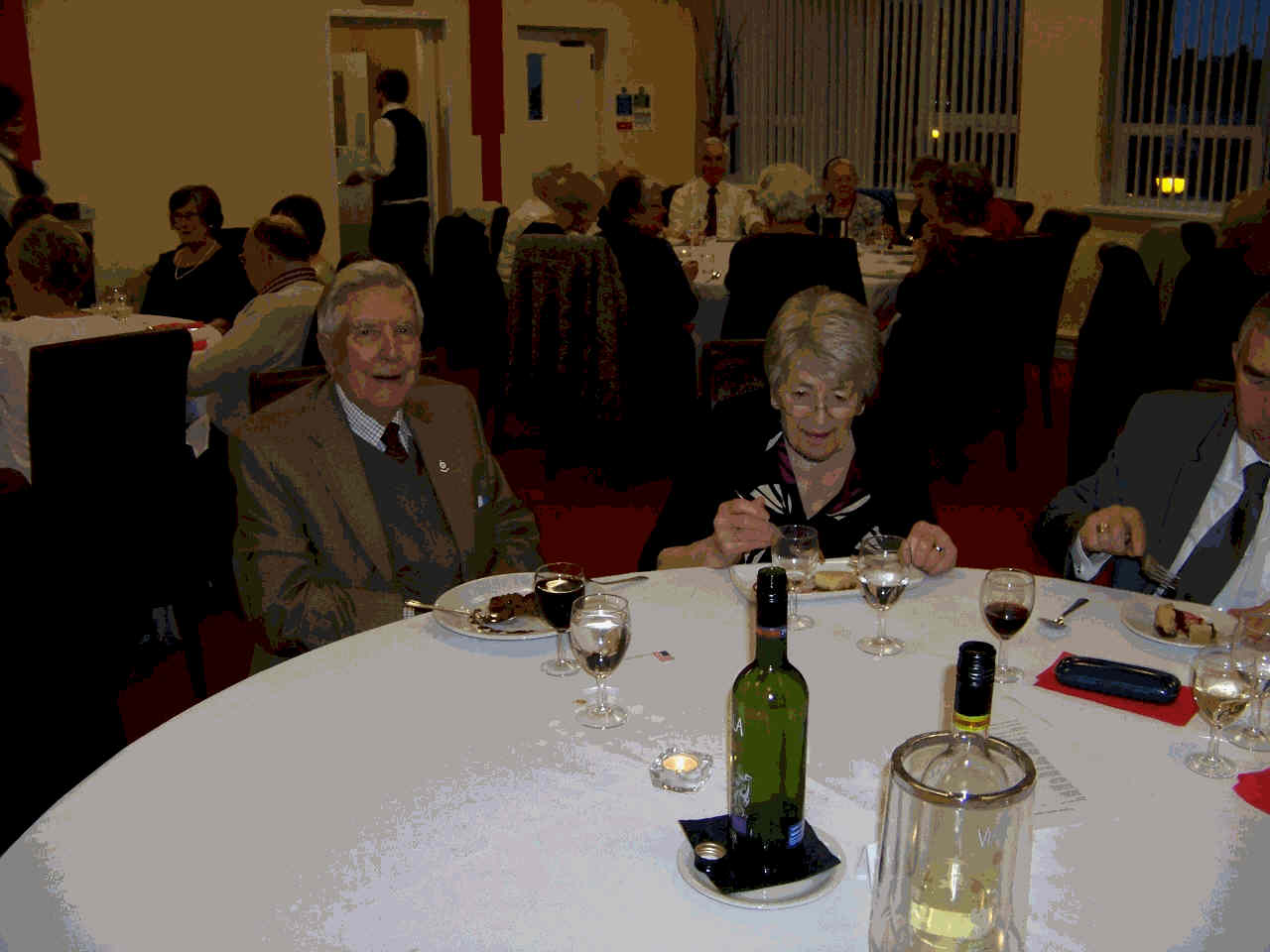
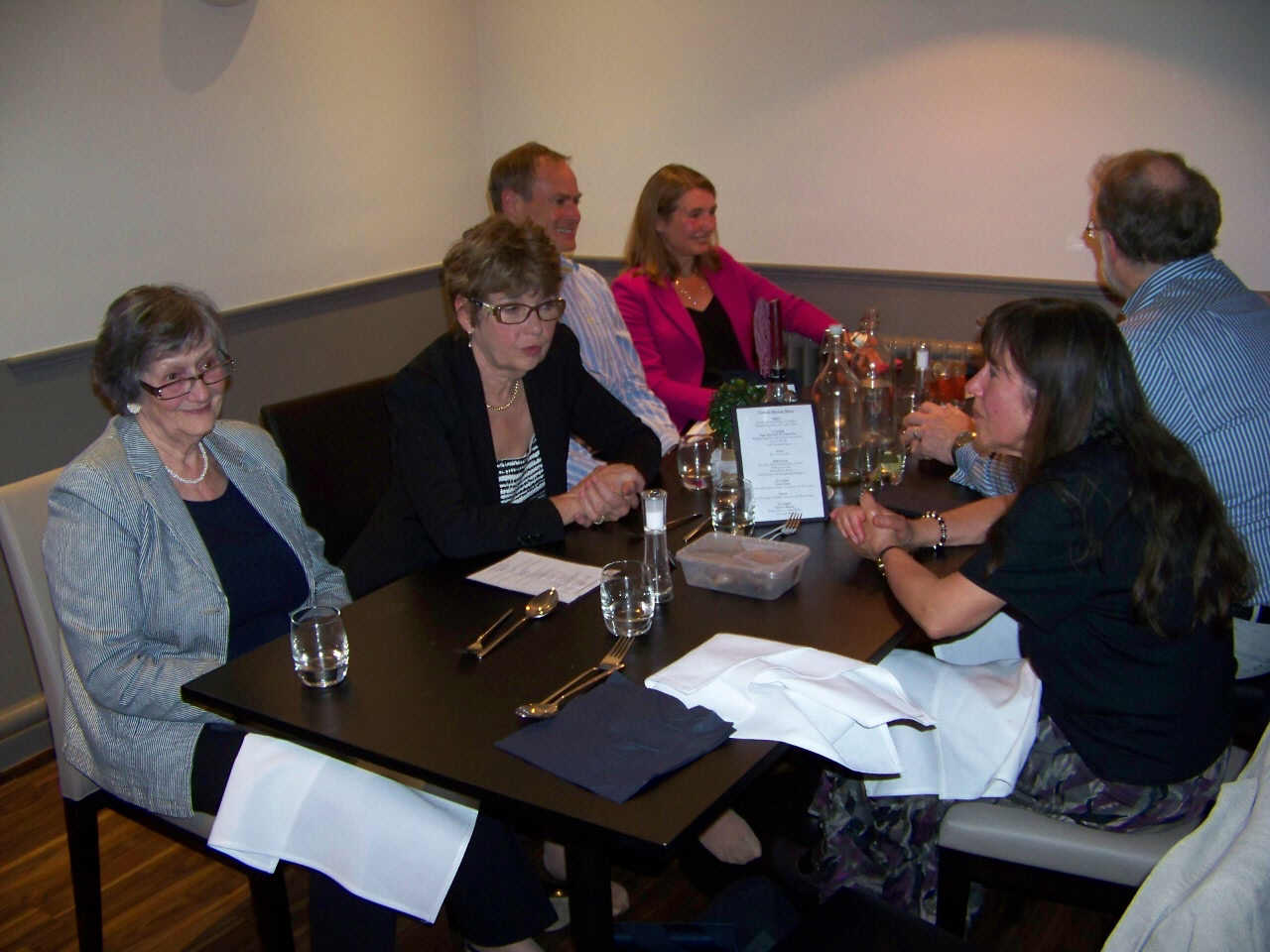
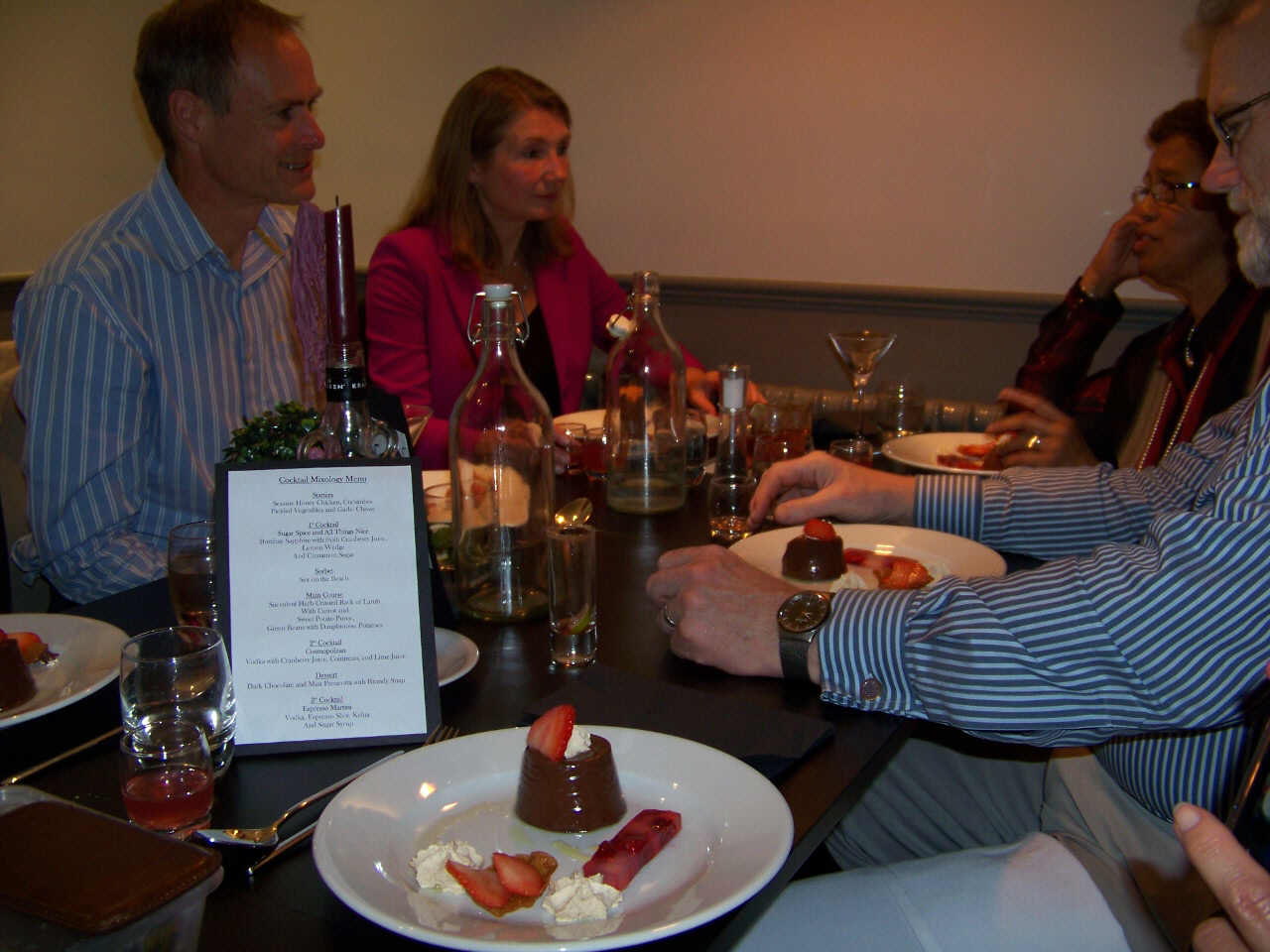
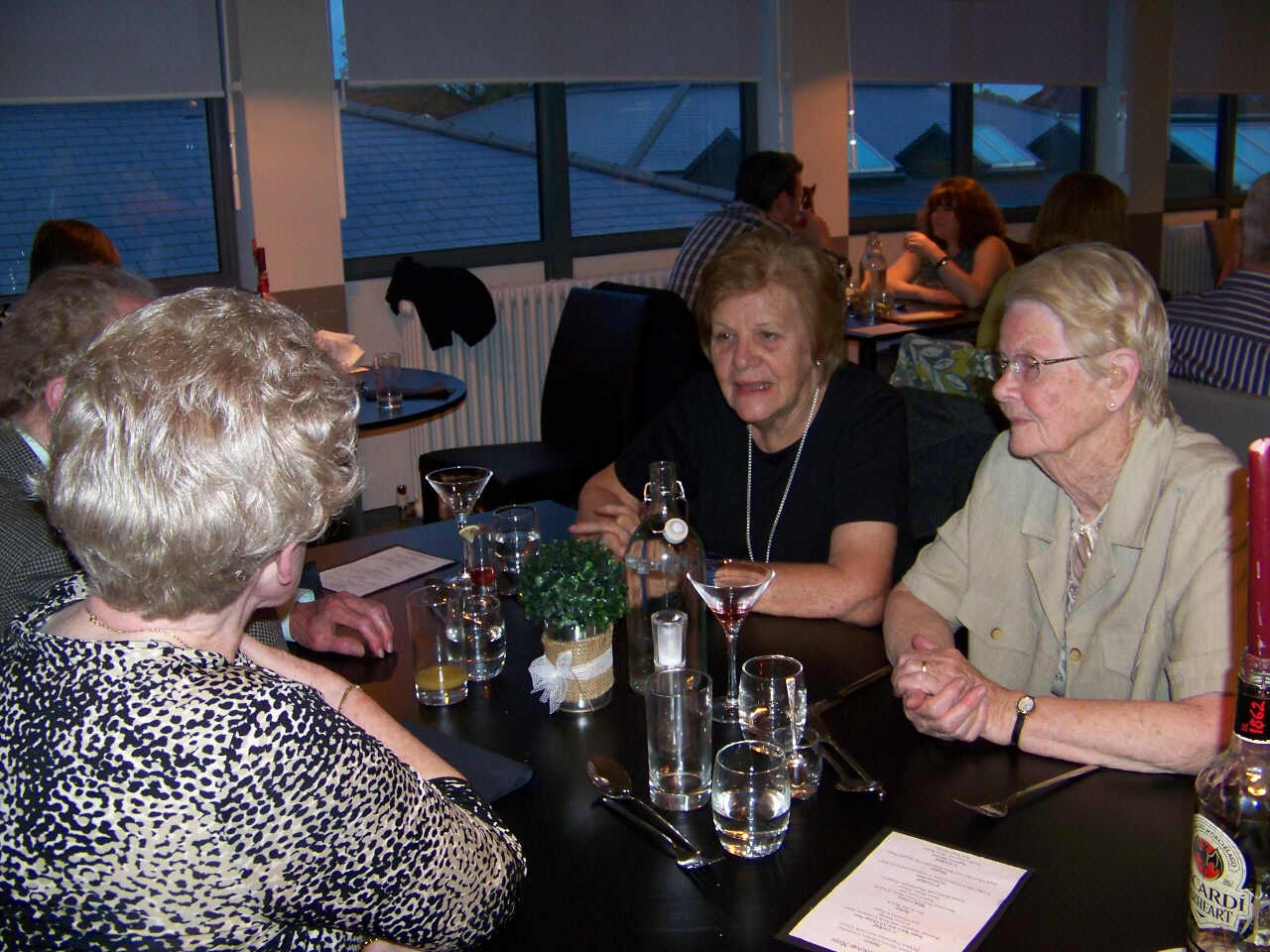
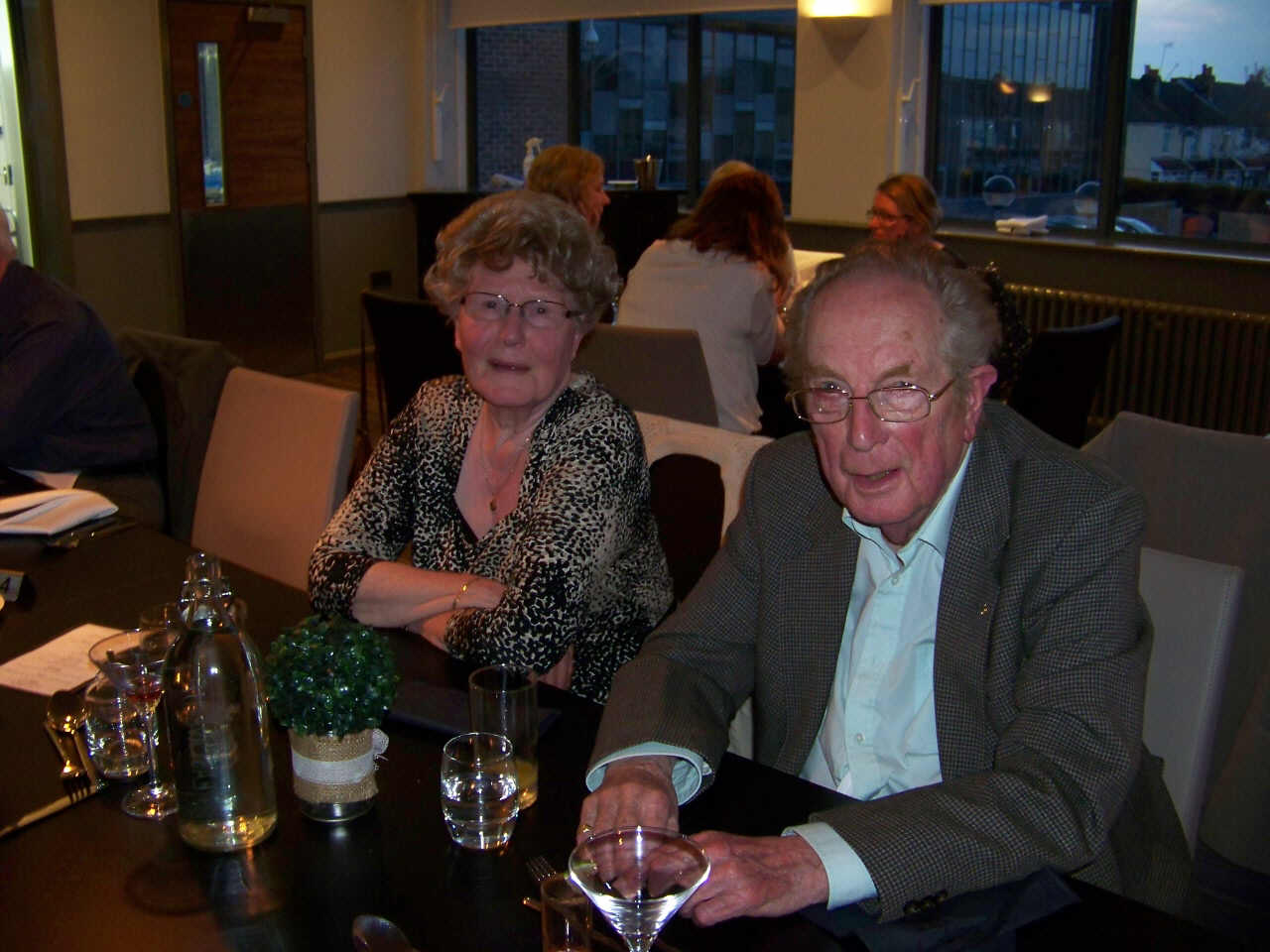
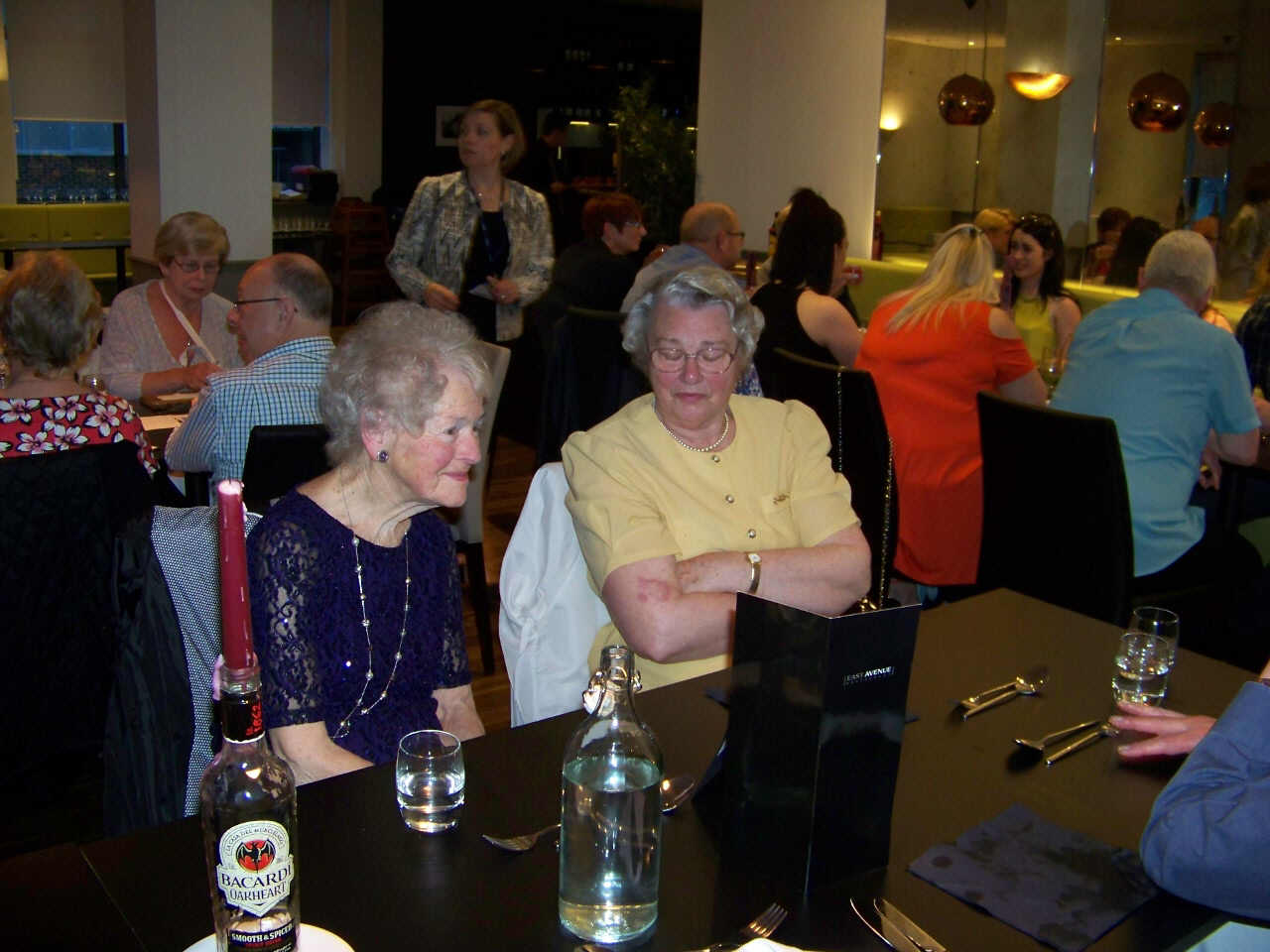
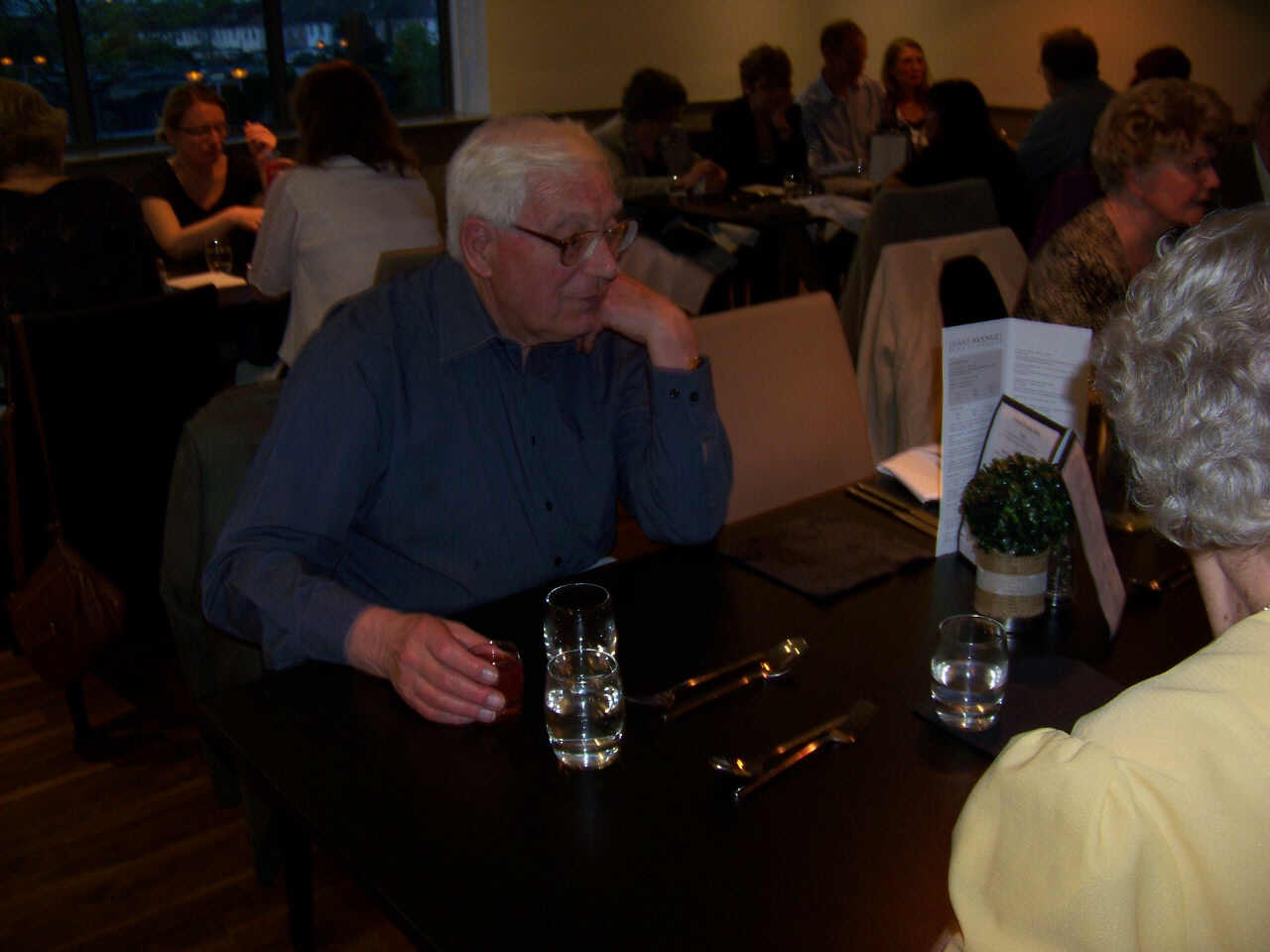
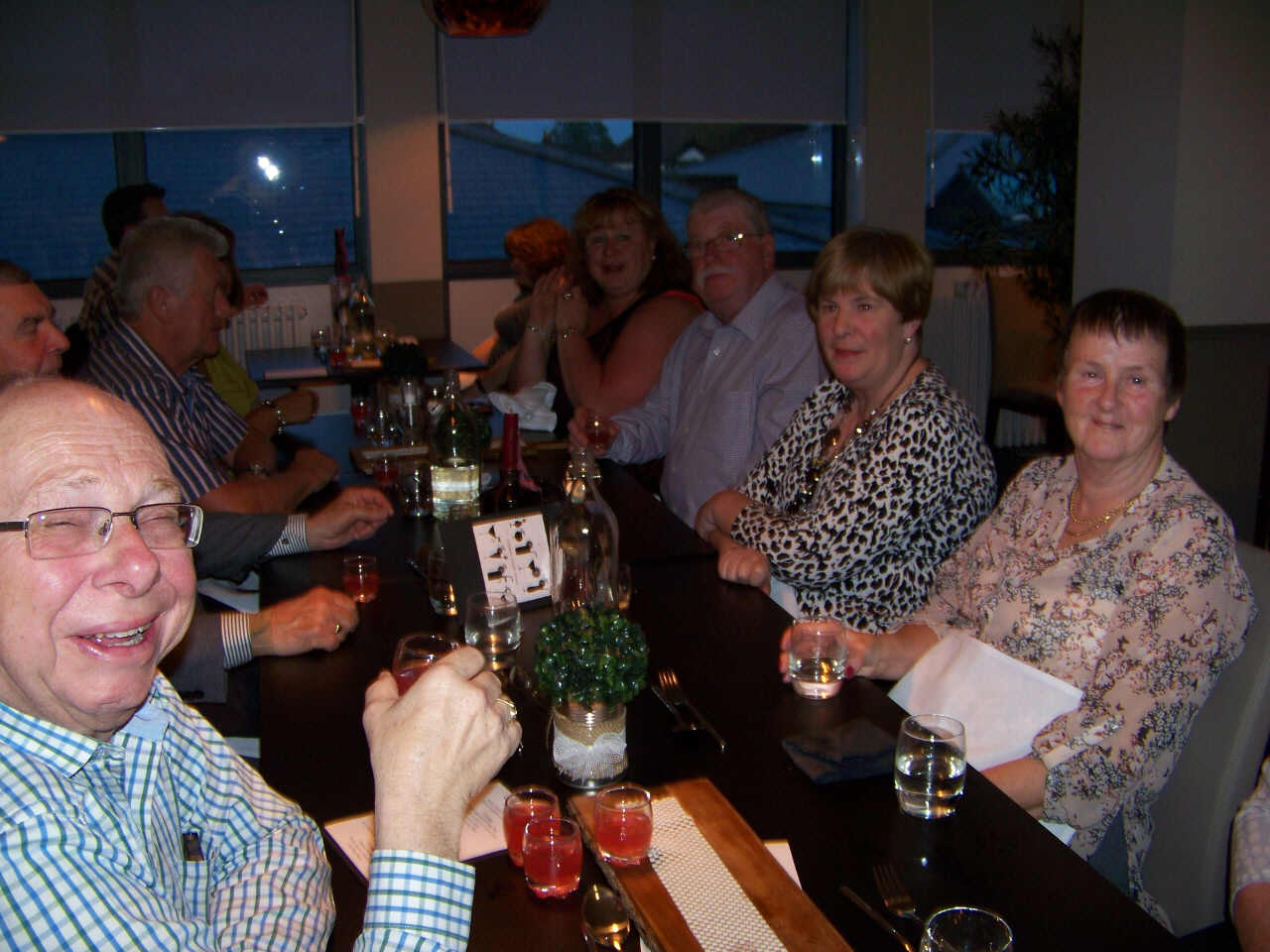
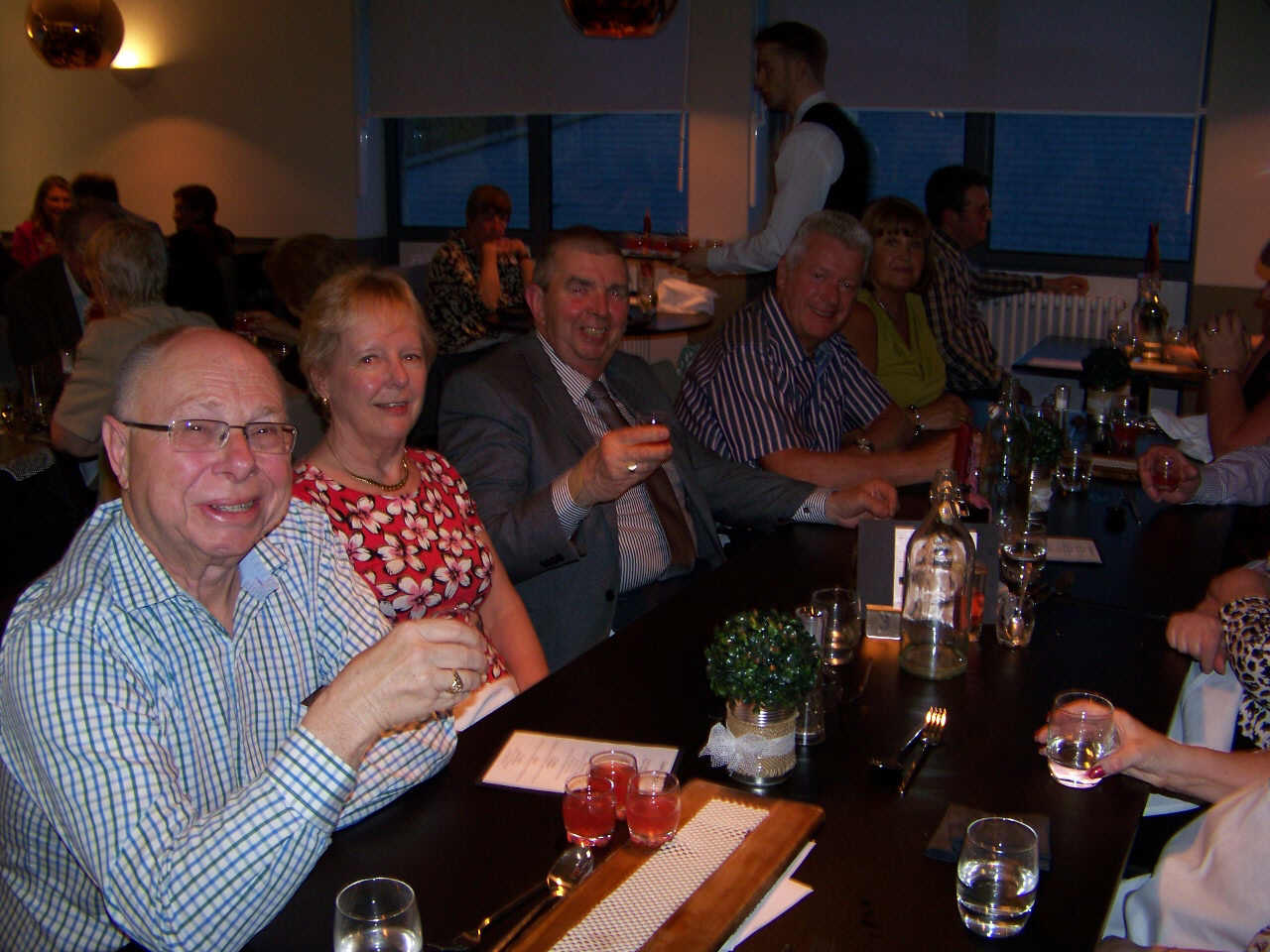
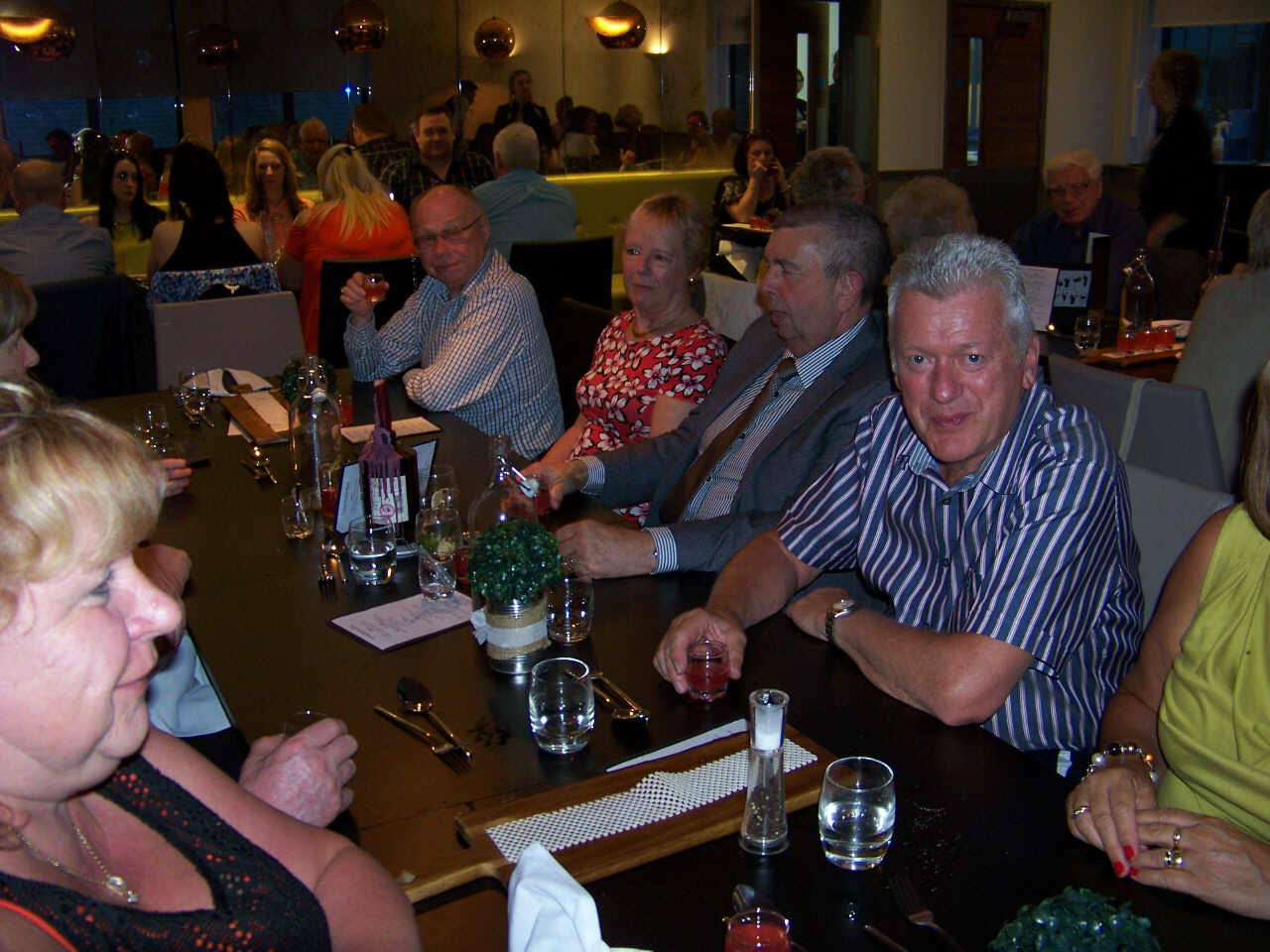
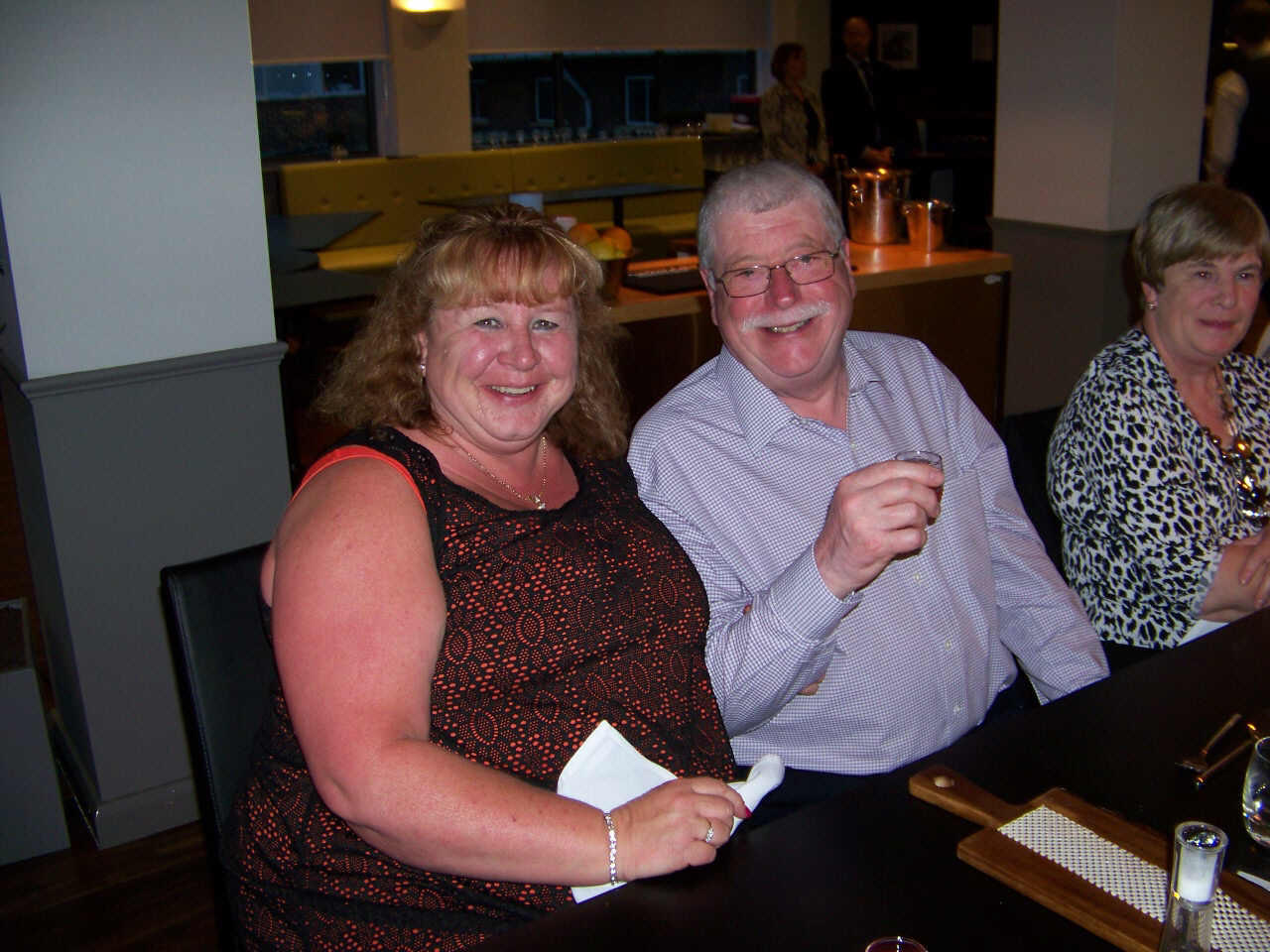
Dinner on Friday 6th May at the Red Carpet Restaurant, Eastleigh College
Once again the students at Eastleigh College surpassed themselves. The menu on this occasion was entitled “Cocktail Mixology” and as the name suggests, cocktails were served throughout the meal, and with each cocktail came a demonstration on how it was made. One of which was the “Cosmopolitan”, comprising Vodka with Cranberry Juice, Cointreau and Lime Juice. Needless to say as the evening progressed so did our state of inebriation. I seem to recall that the food was excellent as well!
AGM Saturday 7th May 2016 at Barton Peveril College
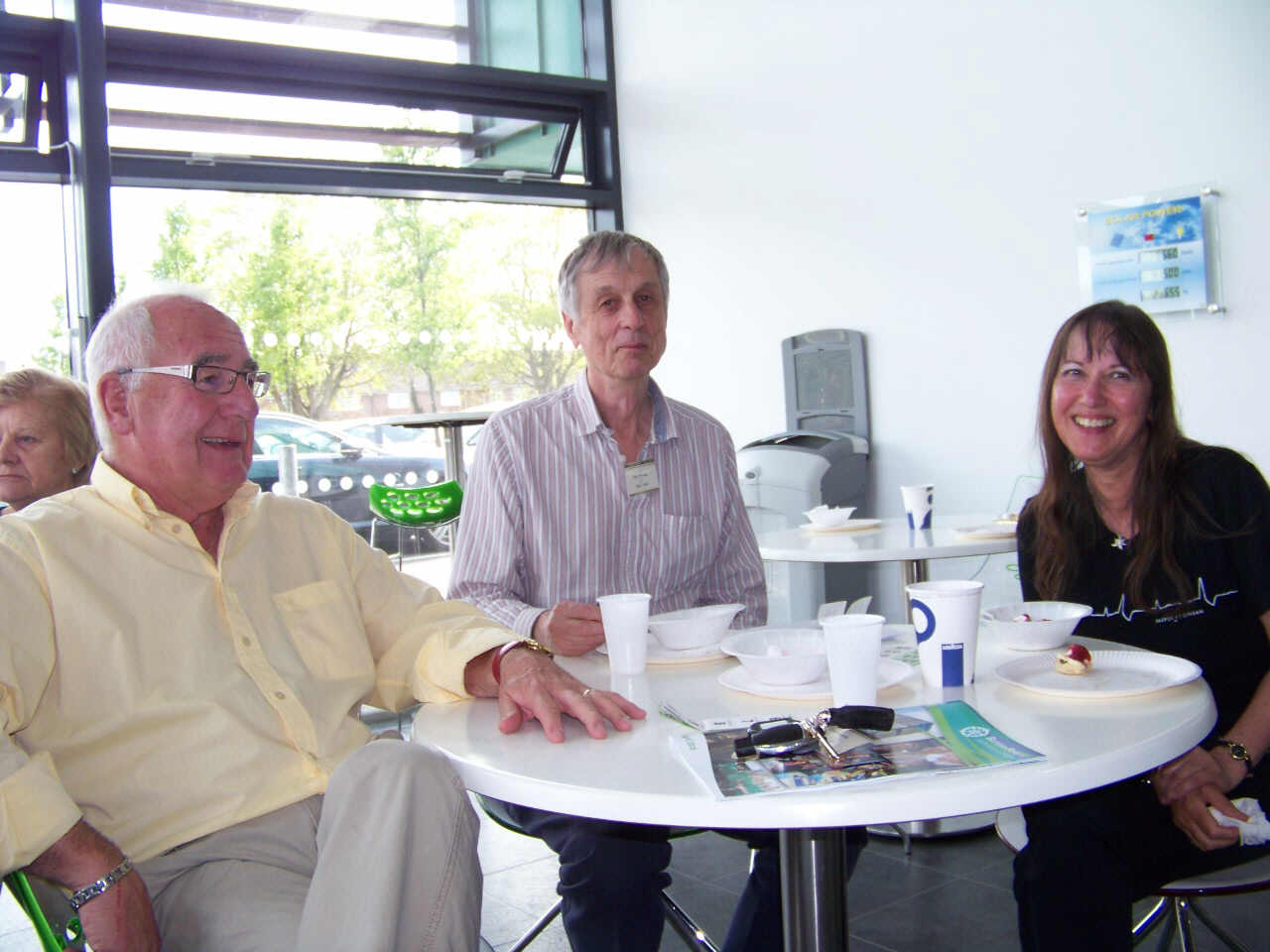
The weather was glorious and a good time was had by all. Loraine and Sue once again provided a splendid tea which rounded off the afternoon nicely.
Acting Chairman’s Report
You will all know that Cecil Churcher, our Chairman since 1997, has very recently stood down from his roles of Chairman of the Association and editor of the Bartonian. He is now back at home from a brief period in hospital undergoing tests, but is not yet fit enough to be out and about. We wish him well in his recovery.
We continue in our attempts to keep all Old Bartonians’ in touch with each other and to enjoy a number of social events throughout the year. The term Old Bartonian covers, of course, ex-pupils of both Eastleigh County High School and Barton Peveril Grammar School. We have to thank John Barron for reminding us of the history of the Association through articles in the latest Bartonian.
Once again we hope to receive reports from the pupils who have benefited from our Bursary scheme. This item has proved popular with members, and we do get an idea of how we are thus able to assist pupils extend their education. We hope to repeat this for as long as our finances allow.
We have enjoyed two Dinners and two Quiz Nights over the last year, and while the number attending the dinners is reducing, the Quiz Nights are becoming increasingly popular, with over 50 at the latest one in January. Reunion day, today, remains popular in its new format and venue, and we are grateful to be allowed the use of the facilities of Barton Peveril College.
We intend similar events over the next year and are mindful of approaching our 20th Anniversary in 2017. Ideas for celebrating that milestone would be appreciated.
We do not keep records of any member’s age, but it is obvious we are predominantly in the age range of 50 to 100 years. Advancing in years has not diminished the excellent performance some of you give at the quiz nights, however.
The custody of the Bartonian magazine is now temporarily with John Barron. We still require you, the members, to provide tales of old to keep this magazine going.
My thanks go to fellow Committee members, particularly our Secretary Lorraine and quizmaster Chris, for their time and efforts in seeing us through another year.
Geoff Chadwick, Acting Chairman
Treasurer’s Report
This report covers the period from 1st April 201 to 31st March 2016
Membership: We were 95 in number for 2015, a small increase on the year before. I have had 76 renewals by today’s AGM, very much as happens every year, but expect a few more over the coming months. I have had quite a few apologies for being unable to attend this AGM. To my understanding only one of our members, Miss Lorna Graham, has passed away during the year.
Accounts: We retain a healthy bank balance. We only have four or five events each year so the accounts remain reasonably simple. We added on-line banking this year, but this is a mixed blessing. It is good that we can save you postage for cheques, the Association the postage for the few bills we get, and the gain in efficiency of paying quickly, without seeking countersignatures on cheques. The only downside is the effect it has on my book-keeping as I no longer have control over exactly when your payment goes to the bank, slightly upsetting my accounting processes.
We make a good profit from the Quiz Nights, for which thanks are to Chris Owen, and I attempt to keep our Dinners at close to cost. Our subscription covers the major outgoings and the overall margin remains steady. Printing costs have reduced with smaller magazines and all other costs, such as for the stationery and the website remain fairly constant.
Donation: Again we were able to give £1000 to the College for bursaries to support students in community projects and we intend to repeat that this year. We will again be told of how that money was spent. Please continue with your generosity, if you are able, as the Committee would like to continue this support as long as we can.
College: We continue to receive excellent support from the College, being provided with facilities for meetings and this AGM free-of-charge with office support throughout the year. We also benefit from free banking from HSBC, with the addition of online banking, and the time and attention of the Committee members.
Overall: Our finances remain healthy. I hope that you will continue to support and enjoy this weekend and other social events during the year and encourage old school friends to join (or rejoin).
Geoff Chadwick, Honorary Treasurer

I received the following email from Michael Arnold (1945-53):
Greetings from a warm and sunny autumn day in Sydney. It looks as though you’ve got some job ahead of you, and you’re going to need contributions to fill up space.
I don’t know whether you think this is a good idea but the thought occurs to me that you might be able to use, perhaps in separate Issues, the opening chapter of my last book ‘Hollow Heroes’ which was published in the US last year. The full chapter runs to about 5000 words which would obviously be too long for one Issue.
The book is something of a polemic because it produces hidden facts behind the conventional images of Churchill, Mountbatten and Montgomery during and after WW2 but I thought it might be of interest to your readers…
This extract covers about one half of the opening chapter:
HOLLOW HEROES
Introduction
– An Unholy Trinity‘Legends are persistent, and delusions tenacious’
Military historian Basil Liddell Hart
To describe Churchill, Montgomery and Mountbatten as
‘Hollow Heroes’ may at first sight seem absurd because they had all emerged from World War II with glittering reputations - they were a veritable Triumvirate in the Pantheon of British World War Two leaders. The truth may come as a shock because none of them were heroes of truly solid integrity. In each case there was an unsavoury hollow core hidden beneath their surface image, an essence that was ignored in what was in the national interests in time of war and for some time thereafter, largely due to acceptance of convention. Concealed amongst these hidden agendas were murky and unsavoury dealings, acts of contrivance, and in a number of cases outright lies. All three were men of huge egos with massive personal ambitions who had little or no time for anyone else.It was whilst carrying out research for one of my earlier books “The Sacrifice of Singapore
–Churchill’s Biggest Blunder”,I was surprised to uncover that in the case of each of these three men there was a totally different side which showed that much of their reputations were built on contrived results, deceptions and dishonesty. As the title of my previous book suggests this was particularly true of Churchill, but on digging deeper and employing the Socratic principle of ‘following the evidence wherever it leads’ it emerged that there was evidence demonstrating similar contradictions of the popular images of Montgomery and especially, Mountbatten. Churchill and Montgomery each wrote their own self-serving versions of events, Churchill going so far as to actually say that history would be kind to him because he would be writing the history.The expression that
‘truth is the first casualty of war’ was originally attributed to 5th century BC Greek dramatist Aeschylus and was repeated at about the same time by the Chinese General Sun Tzu and Prussian military authority von Clausewitz also alluded to it. However all three of them were referring to the use of truth as a deception strategy or military tactic against an enemy, whereas the more recent comment from American senator Hiram Johnson was an allusion to elected government officials deliberately misleading their own peoples in order to disguise unpalatable facts to avoid a popular backlash. The three individuals to be examined here were not so much guilty on that score – although there were instances when that accusation could legitimately be mounted – but in frequently acting dishonestly in order to advance or promote their own careers. These actions were either to the detriment of others of their peers, or involved the deliberate and unnecessary sacrifices of many lives. Thus this was not in the traditional sense truth being a ‘casualty of war’ but the deliberate use of lies (the opposite of truth) to safeguard and/or advance their own positions or reputations.All three would have been said to have
‘a good war’ – an expression frequently used to describe how senior commanders had advanced their careers - but how many of the ordinary wartime soldier or sailors who survived would ever even think they’d had ‘a good war’? How many army privates or able seamen would have felt anything other than total relief when it was all over? It is an issue that regularly emerges here for it is an angle that is often lost in the afterglow of victory, but it is one that should be kept in mind when the truth behind the heroic images of these three is examined.Mountbatten didn’t write his own account but according to
one of his biographers, Philip Ziegler, he carefully made sure that Ziegler’s
account fell into line with what Mountbatten wanted. Ziegler wrote of him:
“His vanity, though child-like, was monstrous, his ambition unbridled. The
truth, in his hands, was swiftly converted from what it was, to what it should
have been. He sought to re-write history with cavalier indifference to the facts
to magnify his own achievements.”#
Such was Ziegler’s admiration that despite this apparent condemnation he
confessed that he had a note pinned above his desk reading, ‘Remember that,
after all, he was a great man.’ It is difficult to understand how any biographer
can even profess impartiality if having made such a damning assessment he still
admits to being constrained by such a self-imposed caveat. ‘Great’? Who says so?
Apart from Mountbatten himself that is.
Mountbatten didn
’t write his own account but according to one of his biographers, Philip Ziegler, he carefully made sure that Ziegler’s account fell into line with what Mountbatten wanted. Ziegler wrote of him:"His vanity, though child-like, was monstrous, his ambition unbridled. The truth, in his hands, was swiftly converted from what it was, to what it should have been. He sought to re-write history with cavalier indifference to the facts to magnify his own achievements."
Such was Ziegler’s admiration that despite this apparent condemnation he confessed that he had a note pinned above his desk reading, ‘Remember that, after all, he was a great man.’ It is difficult to understand how any biographer can even profess impartiality if having made such a damning assessment he still admits to being constrained by such a self-imposed caveat. ‘Great’? Who says so? Apart from Mountbatten himself that is.
Both Churchill and Mountbatten had massive egos, huge ambitions and a propensity for self-aggrandisement on such a scale that if not actual dishonesty, certainly manufactured and distorted facts, and of course a war was the ideal stage for each of them. Churchill and Mountbatten both came from backgrounds of distinct social privilege. Churchill was born at Blenheim Palace, the eldest son of Lord Randolph Churchill and a direct descendent of the Duke of Marlborough. Mountbatten was born at Frogmore House in the grounds of Windsor Castle, the youngest child of Prince Louis of Battenberg who was a great-grandson of Queen Victoria, and Mountbatten himself was a second cousin of King George VI.
Montgomery was a different case altogether, one where the illusion of an enormous ego seems in fact to have been a cover for insecurity and an inferiority complex; the apparently aggressive personality being a compensating mechanism. He was a general of reasonable competence who, through cleverly concealed opportunism, managed to beguile the world into believing he was a genius by manipulation of facts and consistent self-promotion. This will be examined later in greater detail and many of the classic symptoms of an inferiority complex – fear of making mistakes, tendency to be rude and aggressive, excessive seeking of attention, criticism of others, etc,- are documented and so completely characteristic of Montgomery that the hypothesis seems quite rational. Indeed this interpretation has already been put forward before, Antony Beevor in his book ‘D-Day’ saying that Montgomery ‘suffered from a breathtaking conceit that almost certainly stemmed from some sort of inferiority complex’. It is time that the reality behind the public image of the British military genius of World War Two, largely contrived by Montgomery himself and fanned by an adoring British media, was put into a context of dispassionate reality. Free of emotion and the constraints of convention we shall see someone who was a capable military commander but not much more. Montgomery is under scrutiny here to evaluate his actual performance against his own claim to greatness.
Churchill and Montgomery, had loveless childhoods and although such parental attitudes may not have been much worse than the norm for a certain strata of society in 19th and early 20th century England, it seems likely that the experience left its mark, each of them in their different ways evolving into self-centred individuals of ruthless ambition. Mountbatten’s childhood by comparison seems to have been fairly happy although even at a young age he showed self-confidence way beyond his years, a trait that along with his increasing vanity would cause him to be detested by those with whom he worked in Government.
When I was researching for my book about the fall of Singapore, my first inkling that there was rather more to the popular image of Churchill than met the eye arose from a comment made by military historian Correlli Barnett in a Singapore edition of The Straits Times in 1997. In the correspondence section of that paper discussing the reasons for the fall of Singapore to the Japanese in 1942, Barnett said then that Churchill, more than anyone else, had been responsible and that ‘His fingers were all over it’ he said. Up until that point I had accepted the conventional accounts that attributed the Singapore debacle solely to ham-fisted and bungling by the military at a local level against a badly equipped and inferior force. I discovered that the truth was quite different and in the research for my book I began to uncover a veritable mine of hidden issues and facts that had been deflected by the individuals concerned or ignored by authors in the interests of orthodoxy.
By sheer accident I also uncovered concrete (literally) evidence that in fact, the Japanese army was far larger than had previously been thought to have been the case. This is revealed by a monument in the Japanese cemetery in Singapore that is there today for anyone to see. From 1977 to 1995 Barnett had been Keeper of the Archives at Churchill College Cambridge and was therefore in a unique position to offer an opinion. Intrigued by his assessment of Churchill I began my own investigations and found a wide range of opinions and accounts of the man. These varied from the expected hagiographies to the more recent dissections - in 1993 by Professor John Charmley, ‘Churchill – End of Glory’, in 1994 by Clive Ponting, ‘Churchill’, and in 1995 came Professor Richard Overy’s book ‘Why the Allies Won’. Then in 2006 ex-army officer Gordon Corrigan’s ‘Blood Sweat & Arrogance and the Myths of Churchill’s War’and his more recent 2010 book, ‘The Second World War’. All uncovered facts, issues and personality traits that were revealing in the extreme and all of them laid bare unpleasant truths about the man as a whole, but particularly so from the standpoint of his behaviour in the Second World War that had hitherto been virtually unknown or even imagined.
Also emerging from the research for my earlier book was a picture of Mountbatten that was completely at odds compared to the conventional wartime heroic image. Some years earlier I had acquired a copy of Stephen Harper’s 1985 book ‘Miracle of Deliverance - The case for the bombing of Hiroshima and Nagasaki’. I bought the book at the time simply because I had lived in Malaysia for many years, was familiar with most of the Far East and was intrigued by the title. I discovered that a large part of that book was devoted to ‘Operation Zipper’, which Mountbatten led and which entailed the invasion of Malaya. Despite the fact that the Japanese had already surrendered and that a simple and orderly re-occupation was all that was required Mountbatten as Supreme Commander South-East Asia, was determined to have his moment of glory and insisted on invading the country rather than simply re-occupying it. I had never heard of this ‘Operation’ and for good reason. ‘Zipper’ cost a large and unnecessary loss of men and equipment and was such a disaster that even now it is very difficult to find any details of what actually went wrong. There appears to be a determined official ‘cover-up’. Stephen Harper was able to relate what actually happened only because he was there otherwise the full details of this sad episode would probably have always remained hidden. Harper was an officer on one of the ships of the invading armada and as far as I am aware his book is the only account that describes that fiasco.
It appears that Mountbatten’s decision was based entirely on the fact that he wanted to have the glory of commanding a victorious invading force with British troops recapturing enemy held beaches as they had done on D-Day. In this he had been encouraged by Churchill, who’d said that the shame of Singapore - for which he was primarily responsible - could only be assuaged by the capture of that fortress in battle, never mind the casualties. A more cautious commander would have realised that such an invasion was unnecessary and all that was required following the Japanese surrender was for Malaya to be re-occupied in a systematic and methodical manner. Impetuous and irresponsible as ever Mountbatten insisted on his forces storming ashore at an un-reconnoitred beach on the west coast of Malaya. Large numbers of men were drowned and equipment lost as they rapidly sank into the deep thick mud of the Straits of Malacca. If he was capable of such a cavalier and irresponsible attitude on this occasion then it seemed likely there might be other examples and so it has proved. In his 1994 book ‘Eminent Churchillians’, Andrew Roberts goes even further in debunking the myth of Mountbatten as a wartime hero, going so far as to describe him as:
‘a mendacious, intellectually limited hustler.
It was Churchill who plucked the inexperienced and youthful Mountbatten from relative obscurity and continually championed him in spite of a series of self-inflicted and costly disasters for which any other officer would at least have been relieved of his command or more probably Court Marshalled by the Admiralty; thus, indirectly it was Churchill who was also ultimately responsible for the disaster at Dieppe, another example of Mountbatten
’s grandstanding. Again it had been Churchill who, having no real concept of exactly what was actually being achieved in North Africa, impatiently sacked two of Britain’s most capable commanders, Wavell and Auchinleck. He did this in order to save his own political skin following the recent loss of three bi-elections and was indirectly responsible for the very lucky appearance on the war stage of Montgomery – lucky for Montgomery that is.It was Correlli Barnett in his book
‘The Desert Generals’ who first pricked the bubble of the Montgomery myth and revealed him as nothing more than an average general, able, yes, but nothing brilliant. His reputation was based entirely on what became known as the Second Battle of El Alamein which can now be demonstrated to have been a conflict that was not fought for reasons of military strategy but one that was required to save a politician, Churchill, and then was so one-sided that Montgomery or any other general for that matter, would have had difficulty in losing the battle. Like any other politician Churchill was more concerned with power, and staying in power, than for any sincere concern for the interests of his country.1
Liddell Hart, Basil, The German Generals Talk, Quill New York, 19792
Arnold, Michael, The Sacrifice of Singapore – Churchill’s Biggest Blunder, Marshall & Cavendish, 20113
Ziegler, Philip, Mountbatten, Alfred a Knopf, 19854
Beevor, Anthony, D-Day, Viking, 20095
Charmley, John, Churchill, The End of Glory, Hodder& Stoughton, 19936
Overy, Richard, Why the Allies Won, Jonathan Cape, 19957
Corrigan, Gordon, Blood, Sweat & Arrogance – the Myths of Churchill’s War , Phoenix, 20078
Co#rrigan, Gordon, The Second World War, Atlantic Books, 20109
Harper, Stephen, Miracle of Deliverance, the case for the bombing of Hiroshima and Nagasaki, Sidgwick & Jackson, 198510
Roberts, Andrew, Eminent Churchillians, Weidenfeld& Nicholson, 199411 Barnet, Correlli, The Desert Generals, George Allen & Unwin, 1960
__________________________________________________
A Coincidental Meeting
I was sitting in a restaurant in Wroclaw in Poland. Diagonally opposite me was a lady who came from Liverpool like me. We talked about common reminiscences of Liverpool. Her husband was sitting next to me listening. Eventually he asked me,
"And where do you live now?"
I replied "Between Southampton and Winchester" because many people have never heard of Eastleigh or Chandlers Ford.
"Where exactly between Southampton and Winchester?" he asked.
"Eastleigh - Chandlers Ford"
"I went to school there. As a child I lived in Nicholl Road and then in Hocombe Road"
I asked "What primary school did you go to? Merdon Avenue?"
"No. I only went to secondary school in the area"
"Which one?" I asked.
"Barton Peveril."
"I used to teach there."
He then asked my name.
"David Thomas"
"Oh! You taught me history. I went to University to study history because of your lessons"
I explained that it was my first year of teaching (it was actually my second year of teaching) and that my teaching would have been probably the lowest standard I taught at in my career because of that, as you improved in teaching with experience, so you were very green in your first year. I asked him what inspired him about my lessons, as it couldn`t have been my teaching at that early stage of my career.
"I remember that you were different from all the other teachers at the time, because you sat on the desk to teach, while the others sat in their chairs behind their desks."
I asked his name.
"David Atkinson."
I found David in my 1966-7 mark book when I returned home. I also remembered a Richard Atkinson in my tennis team at Barton Peveril, and it turned out that he was David`s younger brother.
We talked about the school and the staff he remembered. He remembered Malcolm Holmes as his PE teacher, and he remembered Arthur Sansbury who had taught him geography. He also remembered Richard Hart (English). David Atkinson would have been a pupil from 1960 – 1967, and now lives near Chester. He sent me an extract of a book he had written, a book which explained his love of walking and the mountains, and how he came to take up climbing - . “It began, improbably enough, in Room 10 on the third floor of Barton Peveril Grammar School, in Eastleigh, Hampshire. Now Room 10 was the fiefdom of craggy featured Mr Sansbury, Head of Geography and the most feared teacher in the school. Pupils who had incurred his wrath were often to be retribution. From those third floor windows, I looked out across the mushrooming suburbia as it swallowed up the Hampshire countryside, to a horizon of low hills and trees. As a sixth former, there was no longer the weekly gym class, and the prospect of having to climb the wall bars, to dread. There were no mountains in the view outside Room 10, but inside, yes, there were mountains. Mr Sansbury showed his students slides of glacial landforms in the Welsh mountains, and in the pictures and in his teaching of the subject, a new world was revealed to me.”
David Thomas - History Teacher at Barton Peveril Grammar School 1965-71
In a recent email David went on to say: … I am away in a few days for 3 weeks leading walks in the Austrian Alps, where I run a website. Maybe you would like to look at the site and perhaps mention it in the Bartonian www.sollwalks.co.uk It is a totally non profit making site. In fact it cost me to run it. Apart from walk details which might not interest anyone not going there to walk, it has beautiful photos of each walk.
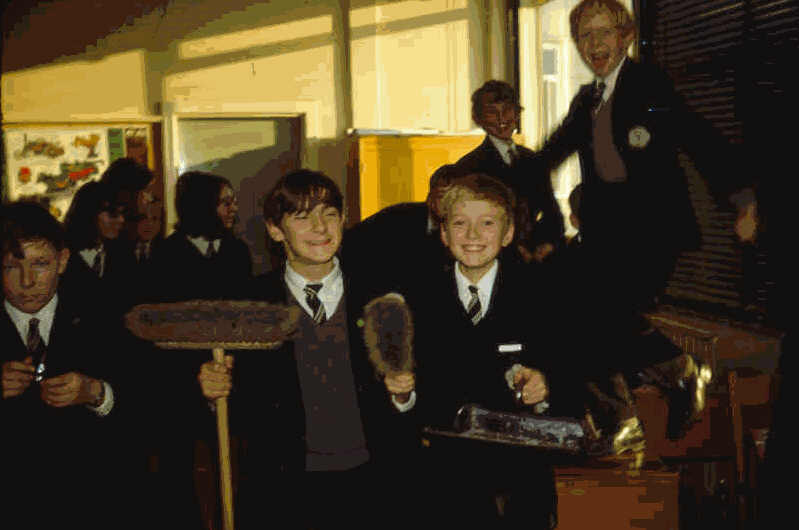
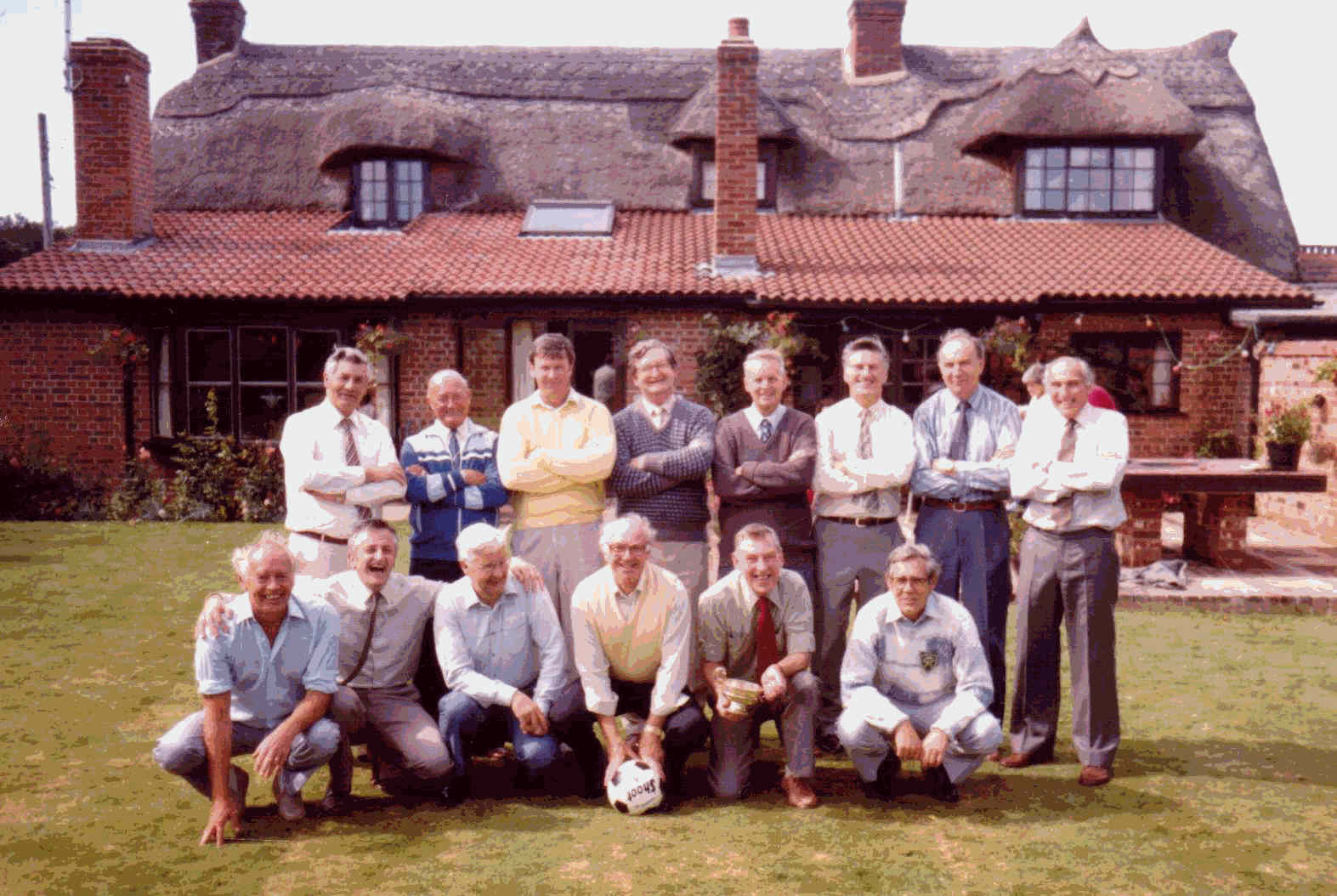
Pupils enjoying themselves at Barton Peveril in the 1960s. This photo was provided by David Thomas on a previous occasion. Do you recognise anyone? Ed.
______________________________________________
Cecil has moved. His new address is Sunnycroft Rest Home, 143 Moorgreen Road, West End, Southampton, SO30 2 HG. Even though he is no longer your editor, I am sure letters from members would still be gratefully received.
_____________________________________________
Veterans Hockey in the North East and the Power of Search Engines!
You may recall my article about veterans hockey in the North East in last year’s Summer Edition (No. 54) in which I mentioned playing in the Pallatics veterans hockey touring team. Well I was enjoying a pint or two of real ale in an after-match warm down at the Low Lights pub in North Shields when a certain Mick Christopher came up to me and said “ Apparently I single-handedly organise all the veterans hockey in the North East” “Do you?” I replied. “Yes, according to your newsletter”. I was gob-smacked. “How did you …” well of course all he had done was to type in the words “Pallatics Hockey Team” on his computer and Google, or some other search engine, had done the rest. So beware of what you write on the internet - big brother is watching!
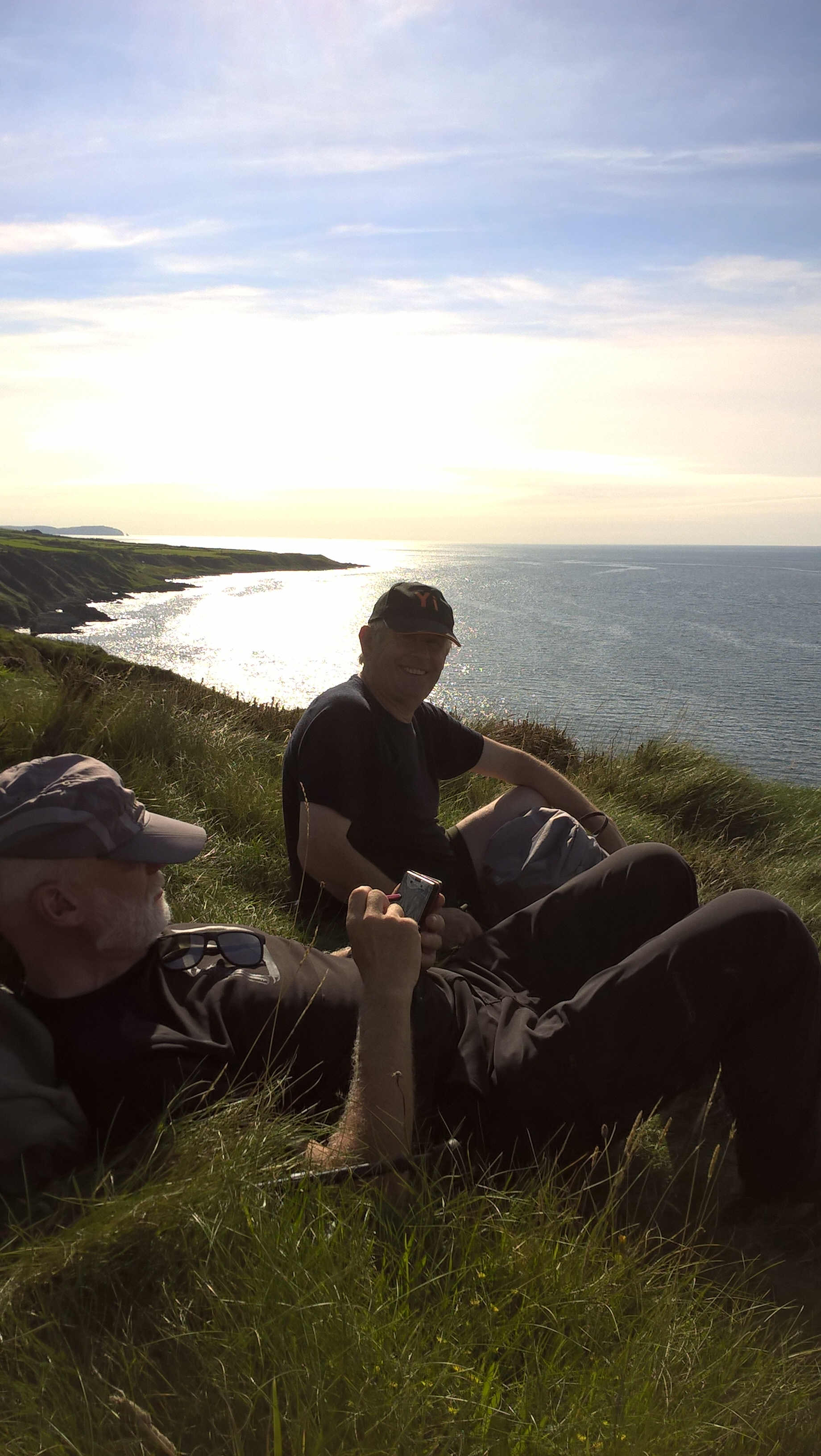
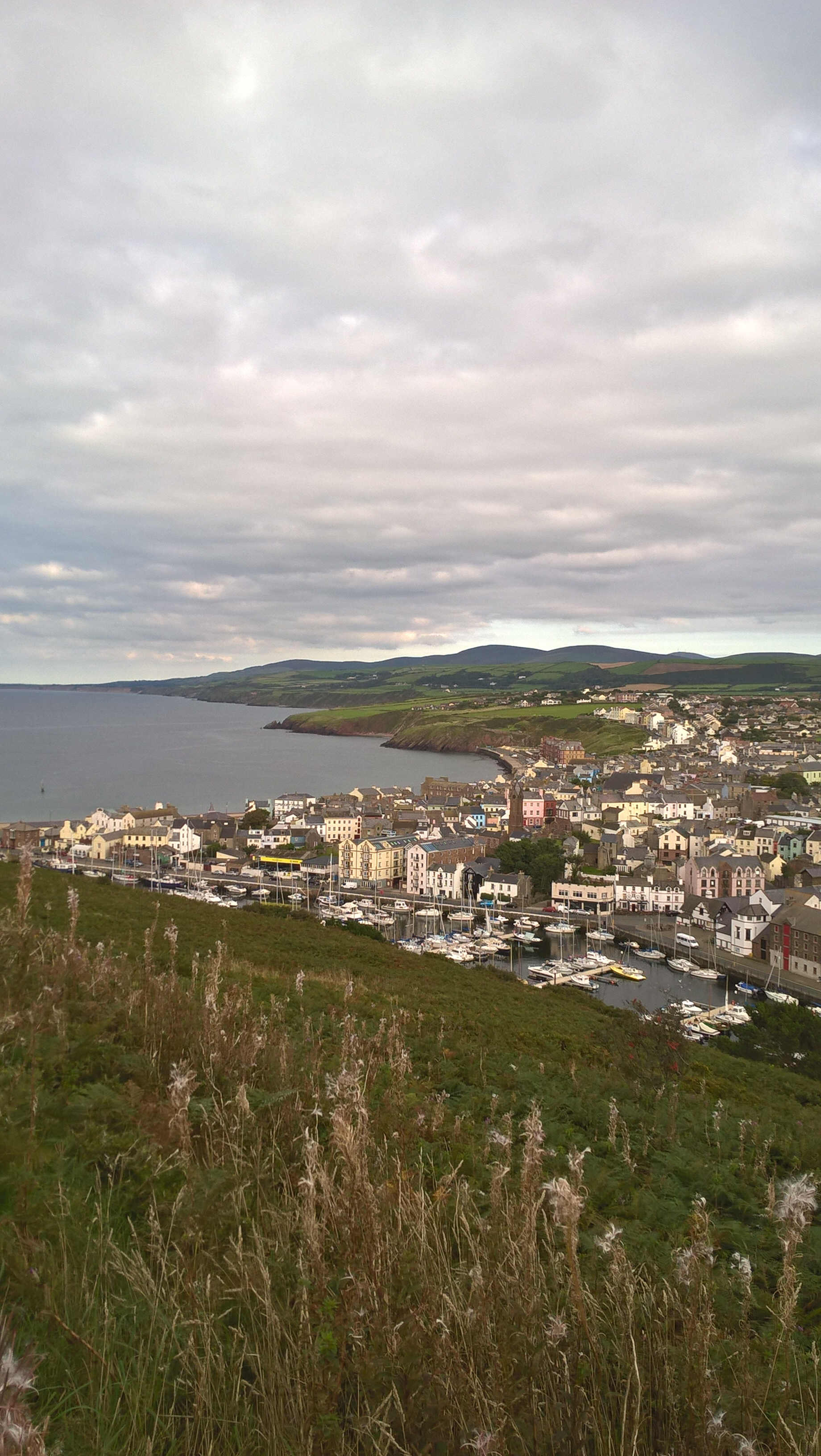
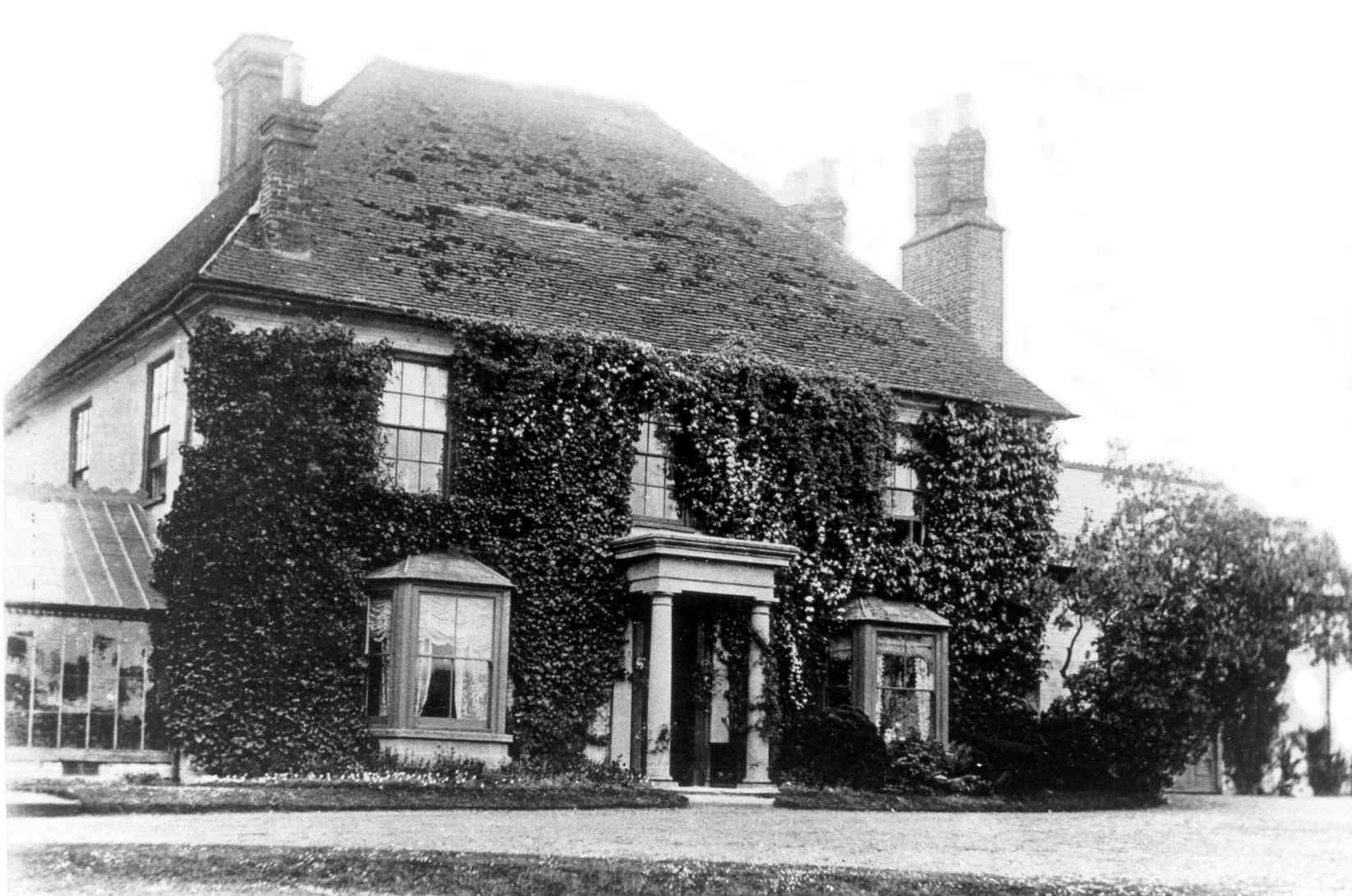
On the subject of the Pallatics, in September we flew in a tiny prop-aircraft from Newcastle to the Isle of Man. There are seven hockey clubs on the Isle of Man which is a surprising number for such a small island. After a weekend’s hockey, a number of us stayed on to do some hiking - travelling by electric tram on one occasion to our starting point. One walk took us through the Arrasey Forest and then along the coastal path, where at one point you could see Ireland in one direction and Scotland in the other, and then onto the picturesque port of Peel where we passed by the Peveril pub (Peel and Peveril being two of our houses at BP in the 1960s, Barton and Peak being the other two. There was also a Peveril shopping centre in Douglas but I was unable to find out precisely what the connection was).
Ed
In this issue my thanks go to Jonathan Prest, Lydia Chester, Geoff Chadwick, Michael Arnold and David Thomas for their contributions. Which just leaves me to wish you all a Happy Christmas and a Prosperous New Year.
Please send your contributions for the next issue to John Barron, 6 Lloyd Street, Ryton,Tyne & Wear, NE40 4DJ or email them to me at
jbarron6@sky.com

and Happy New Year 2017 ,
to all Old Bartonians, families and friends.

The Committee looks forward to seeing you during 2017.
Friday 5th May - Our Annual Dinner
Saturday 6th May - Reunion & AGM
Please support us by being there !